small-renovation-works-singapore
A wall-mounted television looks clean, saves floor space and keeps cables out of reach of children. But the fixing behind the bracket is doing a surpr
- AIM Global Engineering Team
- 5 min read
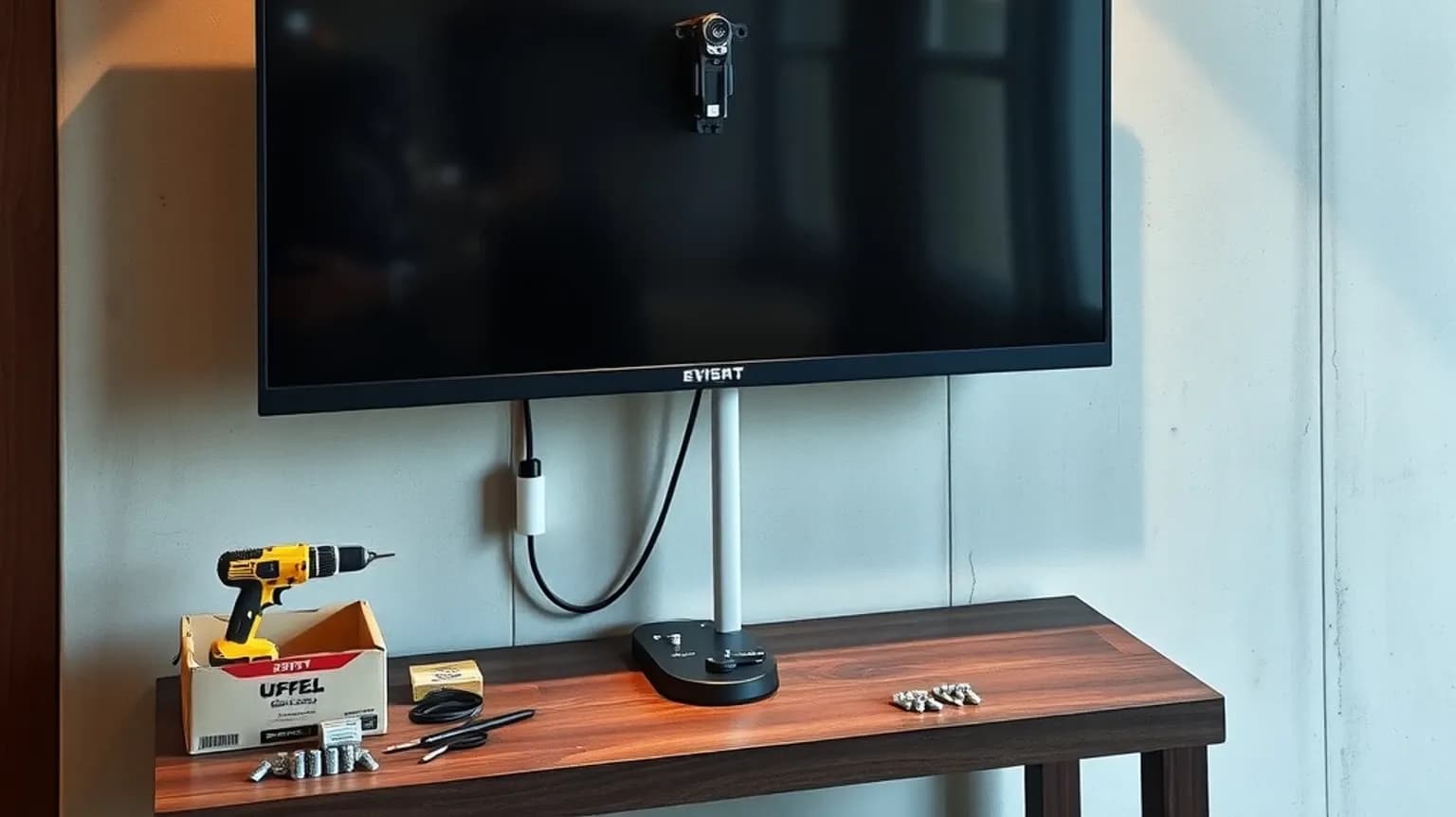
A wall-mounted television looks clean, saves floor space and keeps cables out of reach of children. But the fixing behind the bracket is doing a surprising amount of work. A modern 65-inch TV with a full-motion bracket can weigh well over 20 kilograms, and the leverage of an extended arm multiplies the load on the wall fixings significantly.
In Singapore, the most common mounting failure is not a weak bracket — it is the wrong anchor for the wall type. This guide explains how concrete, brick and plasterboard walls differ, what fixings are appropriate, and what to check before drilling.
Know Your Wall Type First
Singapore homes generally contain three wall types:
- Reinforced concrete (RC) — the most common structural wall in HDB flats and condominiums. Strong, but hard to drill and must never be hacked or enlarged structurally.
- Brick — found in older properties and some internal walls. Holds fixings well, but can crack if drilled carelessly.
- Plasterboard or drywall — common in feature walls, partitions and newer condominium interiors. Hollow behind the surface, with metal or wood studs at intervals.
Drilling into plasterboard is permissible, but you must use appropriate hardware designed for hollow walls or anchor directly into the studs behind the plasterboard.5 A bracket that holds perfectly on concrete can pull straight out of plasterboard under the same load.
Fixings for Concrete and Brick Walls
For solid concrete or masonry, use proper masonry wall plugs or expansion anchors rated for the load.5 A practical benchmark for HDB concrete is at least two M8 sleeve anchors for loads up to 30 kilograms, and four anchors for anything heavier or for articulating arms.5 Each M8 anchor properly set in HDB concrete holds roughly 150 kilograms in shear and 100 kilograms in tension.5
Those figures are for the anchor in ideal concrete. The practical limit is usually the bracket, the screws, or the wall itself if the concrete is poor or the hole is over-drilled. Correct hole diameter, hole depth and cleaning out dust before inserting the anchor matter as much as the anchor specification.
Critically, never hack or enlarge a structural concrete wall to fit a bracket or recess a cable. Drill minimally, and if a cable needs to run behind the TV, use surface trunking or an existing conduit.5
Fixings for Plasterboard and Drywall
Plasterboard alone cannot support a TV bracket on standard plugs. There are two acceptable approaches:
- Anchor into the studs. Locate the vertical metal or wood studs behind the plasterboard and drive lag bolts into them. This is the strongest option, but the stud spacing may not align with your bracket holes.
- Use heavy-duty hollow-wall anchors. Toggle anchors and similar products spread the load behind the board. They are strong when correctly installed, but the plasterboard itself must be sound and the load should be assessed carefully.
For a large TV or a full-motion bracket on plasterboard, a stud-bridging arrangement — fixing a plywood or metal plate across studs and mounting the bracket to that — is often the safest solution. A professional installer will assess the wall and recommend the approach rather than simply drilling where the bracket holes happen to fall.
TV Weight and Bracket Choice
Check the TV's weight without the stand and compare it to the bracket's rated capacity. Add a margin — do not mount a 25kg TV on a bracket rated to exactly 25kg. Full-motion brackets place far more stress on fixings than flat brackets because the extended arm creates leverage. If you want the TV to pull out and swivel, the fixing requirement is higher.
Positioning and Cable Management
Mounting height matters for comfort and neck strain. A common guide is the centre of the screen at roughly seated eye level, though this depends on sofa height and room layout. Position should be agreed before drilling — moving a bracket leaves unnecessary holes.
For cables, plan the route before mounting. If there is no existing conduit, surface trunking painted to match the wall is the practical solution. Chasing a channel into a structural wall is not advisable.
Common Mounting Mistakes
- Using plastic plugs in plasterboard for a heavy TV.
- Fitting a full-motion bracket with only two fixings when four are required.
- Drilling into a wall without checking for concealed pipes or cables.
- Mounting off-centre or at the wrong height because position was not confirmed first.
- Hanging a shelf or cabinet on fixings rated for a much lighter load.
- Leaving enlarged or unused holes unsealed after a failed first attempt.
Frequently Asked Questions
Can I mount a TV on a plasterboard wall in my condo?
Yes, with the right method. Either fix into the studs or use heavy-duty hollow-wall anchors, and consider a stud-bridging plate for larger TVs or full-motion brackets. The wall must be assessed first.
How much weight can an M8 anchor hold in HDB concrete?
A properly set M8 sleeve anchor in good concrete holds roughly 150kg in shear and 100kg in tension.5 The practical limit is usually the bracket and screws, not the anchor itself.
Do I need a professional to mount my TV?
Not legally, but the consequences of a failed fixing — a damaged TV, a damaged wall, or injury — usually outweigh the saving. A professional will identify the wall type, select the correct anchors and confirm the position before drilling.
Can you mount a TV on a feature wall?
Yes, but feature walls vary widely. Solid brick or concrete needs masonry anchors; hollow drywall needs stud fixing or toggle anchors. The approach must match the actual construction.
For TV mounting, shelf installation and secure wall fixings in Singapore, contact AIM Global Engineering PTE LTD at +65 9081 8494. We assess the wall type first and use fixings rated for the load. BCA and ACRA registered (UEN 202211612M).
Featured Services